Powerful Backend Media Processing for Modern Workflows
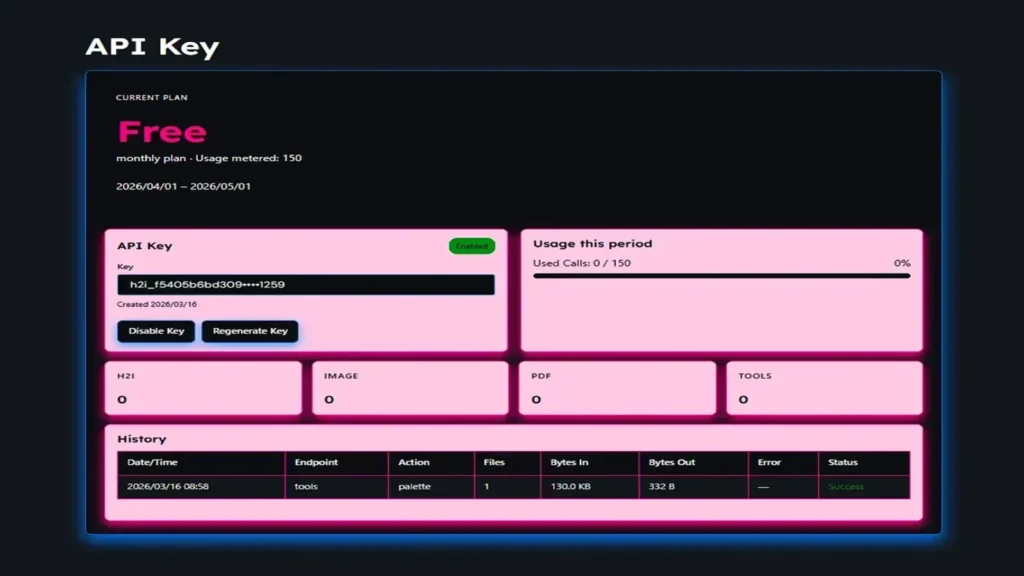
Davix H2I (PixLab) is a media processing API service developed by Davix Labs. It gives users a structured way to access advanced backend processing capabilities without building and maintaining the infrastructure themselves. The platform is designed for applications, websites, automation systems, and digital workflows that need dependable media and document processing.
API-Driven Processing Without Infrastructure Complexity
Davix H2I provides access to powerful backend operations through a simple API-driven model. Instead of managing rendering engines, image pipelines, PDF tooling, and file-processing infrastructure on their own, developers and teams can connect to Davix H2I and use these capabilities as a service. This makes it easier to build products and workflows that require output generation, file transformation, and document automation.
HTML Rendering That Powers Dynamic Output
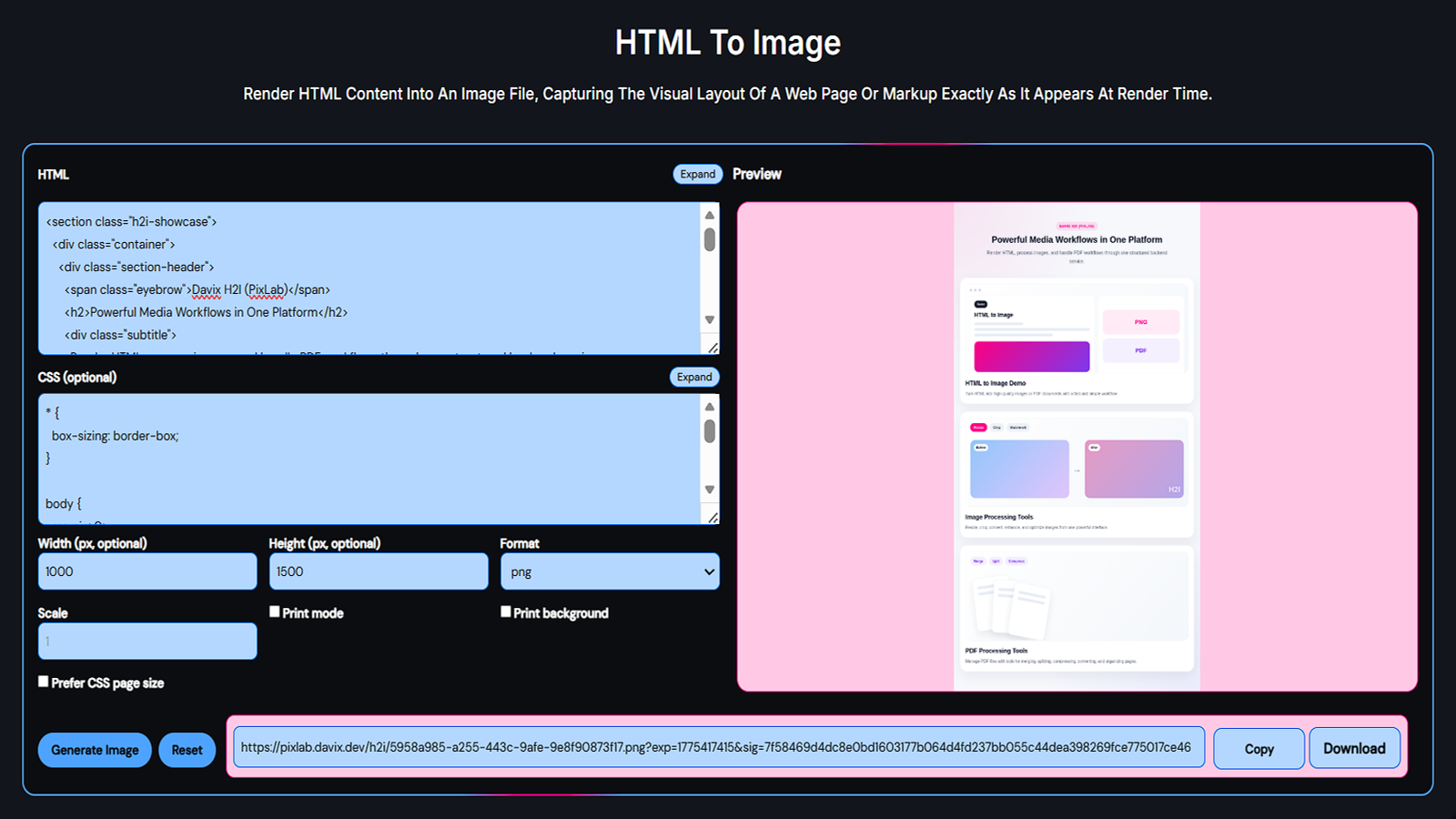
One of the most important capabilities of Davix H2I is HTML rendering. The platform can convert HTML content into images or PDF documents, making it useful for generated reports, invoices, certificates, visual assets, branded exports, dashboards, and other dynamic content workflows. This HTML-to-image concept is the foundation of the H2I name and remains one of the defining strengths of the platform.
Image Processing for Websites, Apps, and Business Use
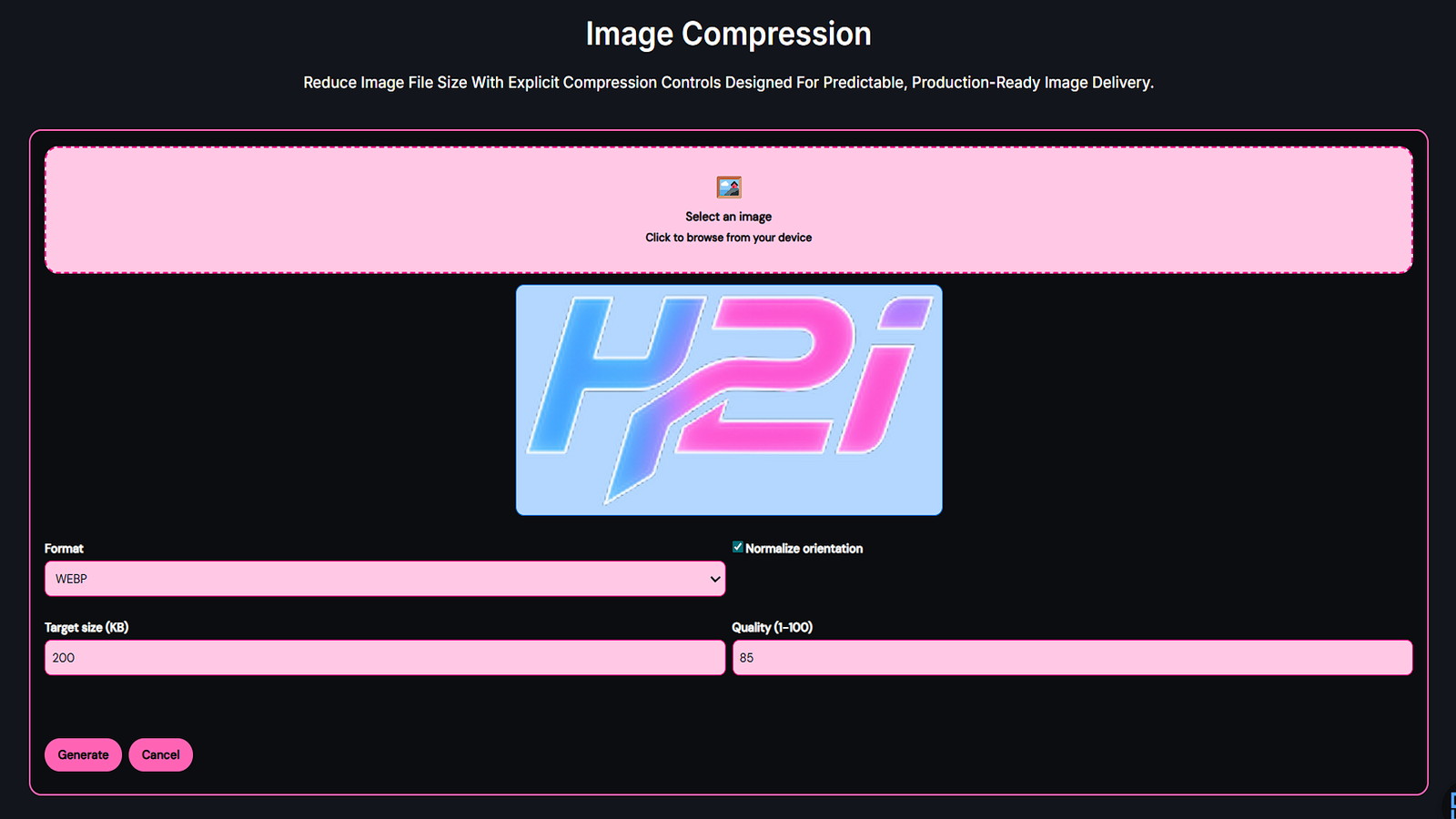
Davix H2I also provides a wide range of image processing features. Users can transform uploaded images, resize and crop them, convert formats, apply enhancements, add watermarks, inspect metadata, and prepare media assets for use in websites, apps, and business processes. By centralizing these operations in one backend platform, Davix H2I helps maintain consistency, speed, and flexibility across many use cases.
Advanced PDF Workflows in One Service
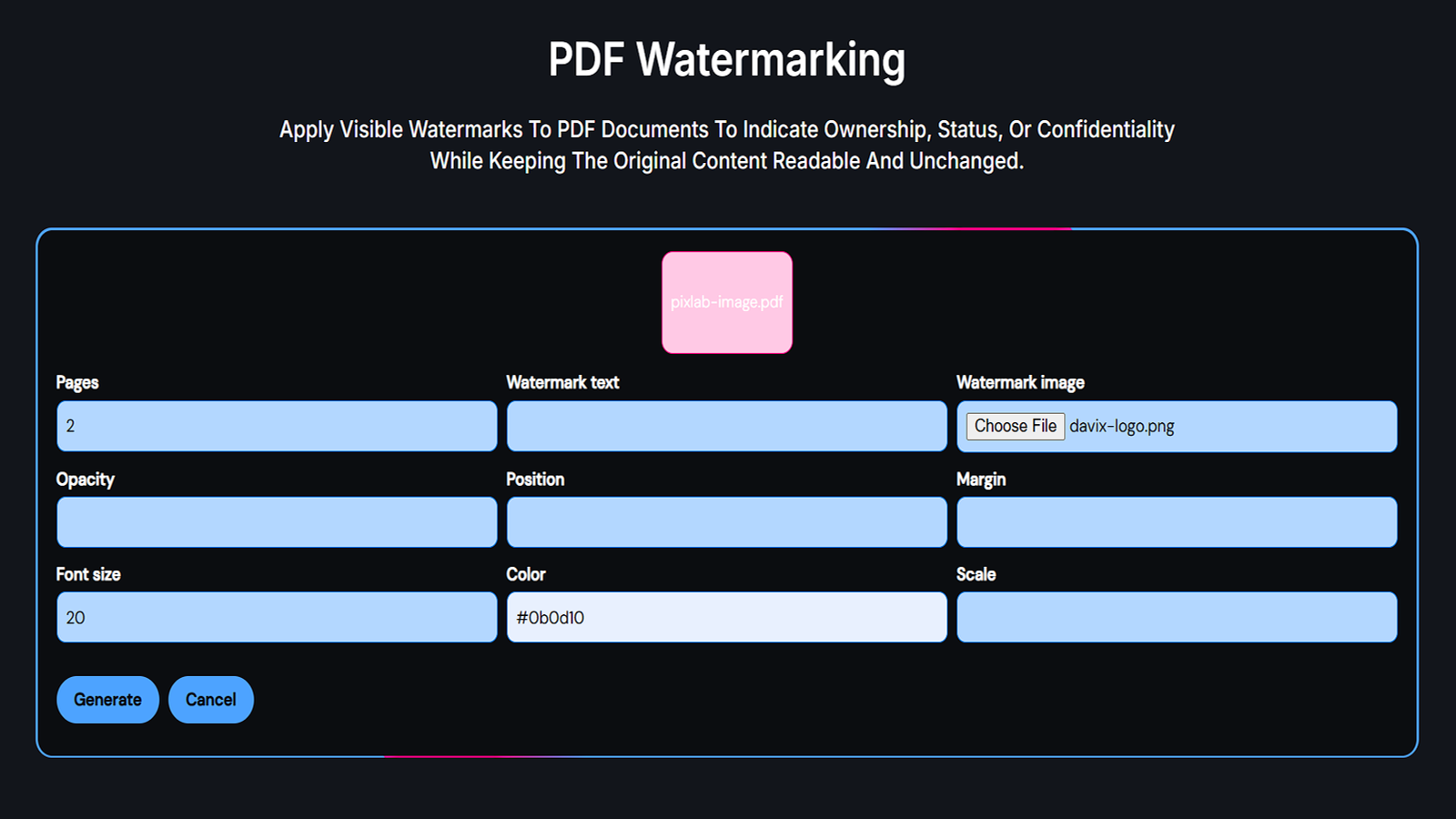
The platform also offers strong PDF processing capabilities. It can generate PDFs from HTML and also work directly with uploaded PDF files. This includes tasks such as merging, splitting, rotating, reordering, compressing, watermarking, extracting content, converting pages into images, and more. These features make Davix H2I a strong fit for document-heavy systems and automated file workflows.
Tools and Analysis Beyond Basic Conversion
Davix H2I also includes tools and analysis workflows that go beyond simple conversion. The platform can inspect files, extract useful metadata, and support workflows where media assets need to be analyzed, validated, or prepared as part of a broader automation process. This helps users move from simple file handling to smarter, more structured digital operations.
Flexible for Developers, Businesses, and Automation Builders
Another key advantage of Davix H2I is its flexibility. It is designed to support direct API usage, application integrations, website-based workflows, and automation environments. That means it can be used by developers writing custom code, businesses building operational systems, and workflow builders who want to connect advanced media processing into a larger automation pipeline.
Why Teams Choose Davix H2I
- Save development time with ready-to-use backend media processing capabilities
- Reduce infrastructure complexity for rendering, file transformation, and document workflows
- Support multiple use cases across applications, websites, automation systems, and digital products
- Create more consistent output with one structured platform for media and document operations
A Reliable Platform for Media and Document Automation
Davix H2I (PixLab) is a powerful backend media processing service that helps users render, transform, process, and automate digital file workflows through one structured and reliable platform.